What an FDA-compliant panel generally contains
FDA consumer guidance says dietary-supplement labels should identify serving size, servings per container, dietary ingredients and the amount of each ingredient per serving.
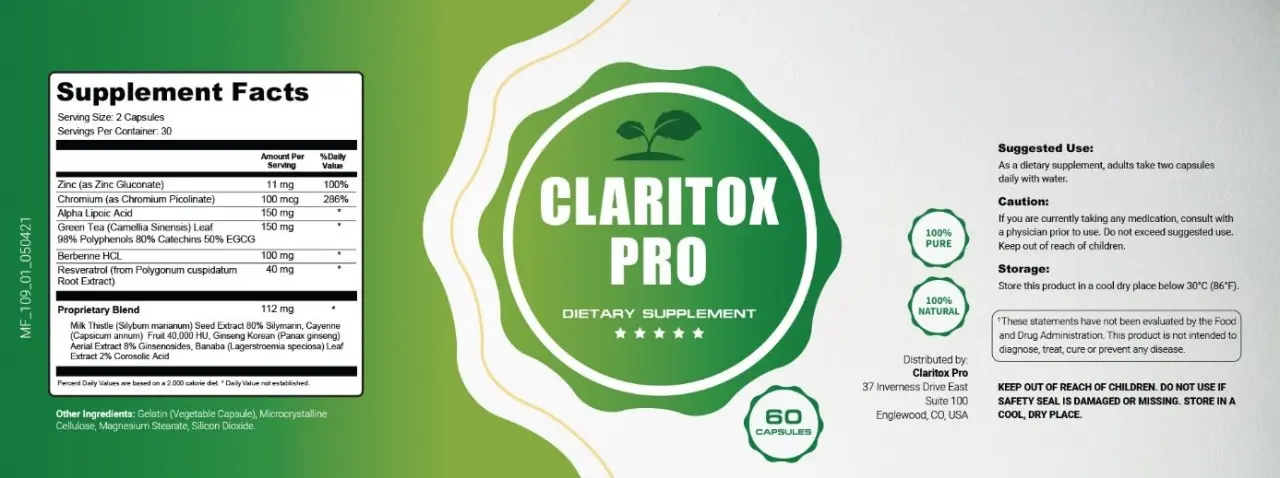
| Serving size | 2 capsules |
|---|---|
| Servings per container | 30 |
| Individually listed ingredients | Zinc 11 mg; chromium 100 mcg; alpha-lipoic acid 150 mg; green tea leaf 150 mg; berberine HCl 100 mg; resveratrol 40 mg |
| Proprietary blend | 112 mg total: milk thistle, cayenne, Korean/Panax ginseng and banaba |
| Other ingredients | Label lists microcrystalline cellulose, magnesium stearate and silicon dioxide, plus internally inconsistent “Gelatin (Vegetable Capsule)” wording |
Important label limitations
- Individual botanical amounts inside the 112 mg proprietary blend are not disclosed.
- The capsule-source wording should be clarified with the vendor.
- A conflicting black-bottle label supplied separately was excluded because its three-capsule formula does not match the white-bottle product.
- The physical bottle received should be checked for later formula changes.
Transcription is not product testing
This page reports what the supplied label says. It does not independently confirm ingredient identity, purity, potency or finished-product effectiveness.
How to read the label critically
- Check whether the serving is one capsule, two capsules or another amount.
- Compare the amount per serving—not just the ingredient name.
- Look for proprietary blends that hide individual quantities.
- Review other ingredients if you have allergies or dietary restrictions.
- Bring the actual label to a pharmacist or clinician when checking interactions.
Does a Supplement Facts panel mean FDA approval?
No. FDA does not pre-approve dietary supplements for safety and effectiveness before sale. A compliant-looking label is not proof of clinical effectiveness, and “manufactured in an FDA-registered facility” is not the same as “FDA approved.”
Reference
FDA 101: Dietary Supplements explains label requirements, interaction risks and the agency’s regulatory role.